
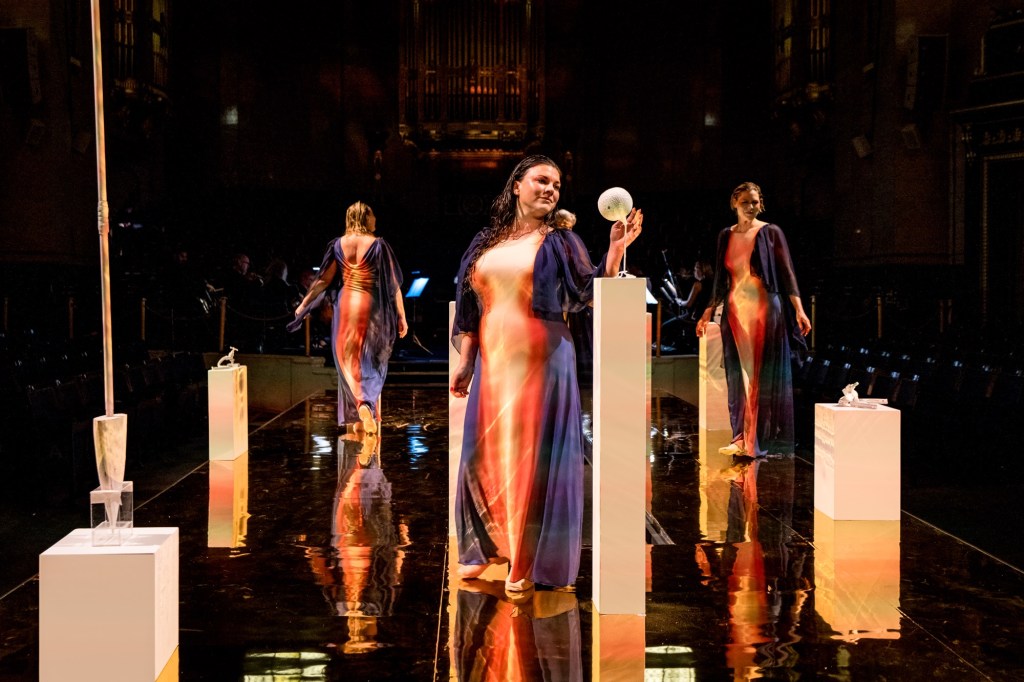
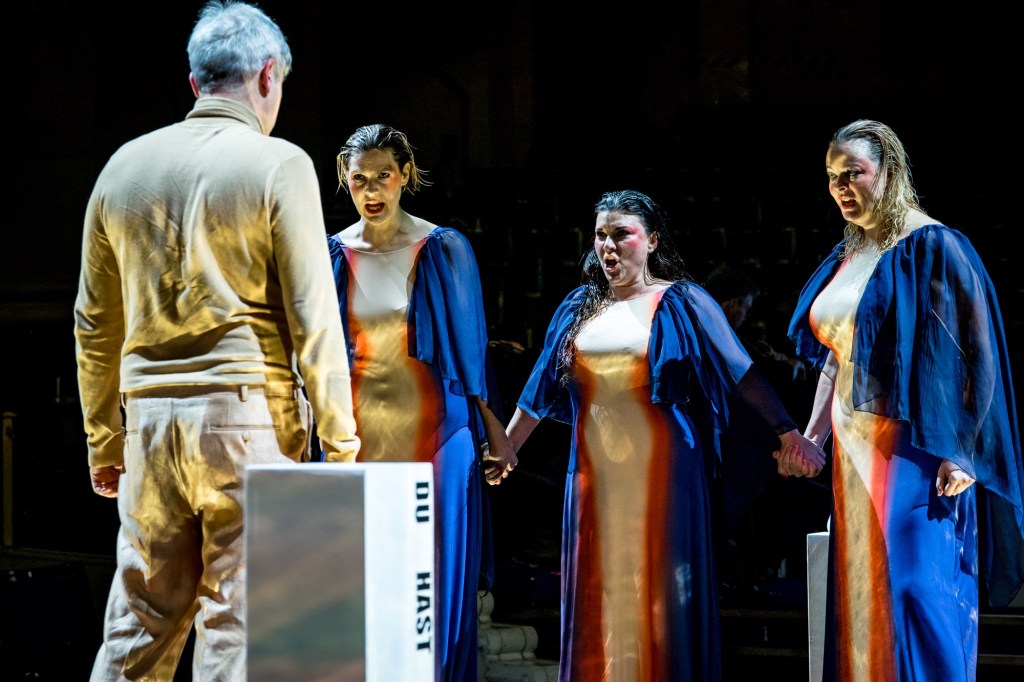
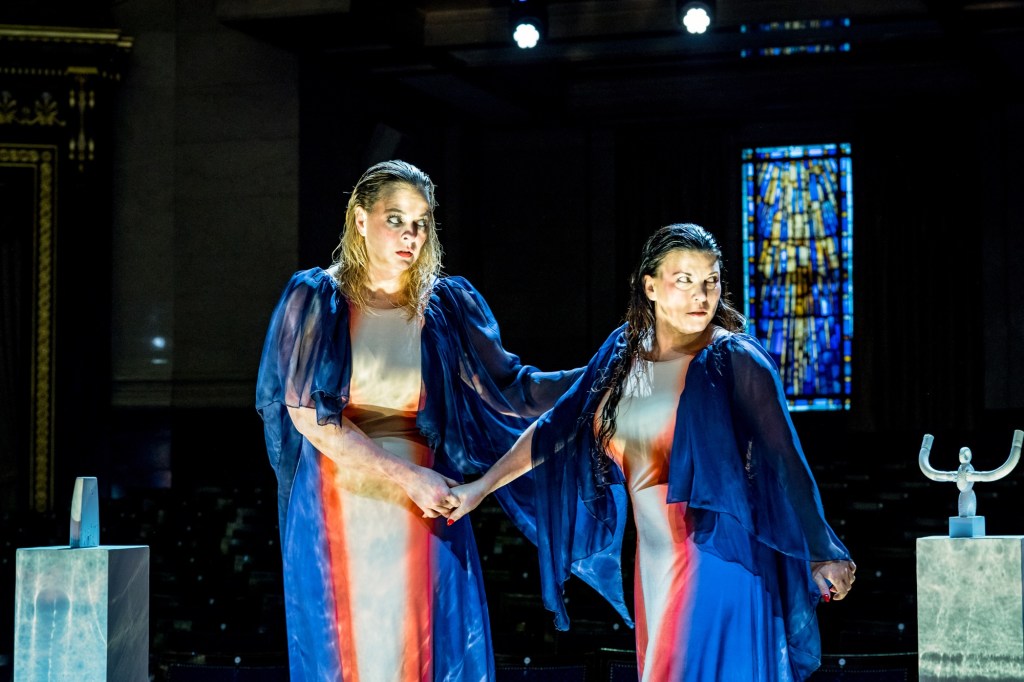
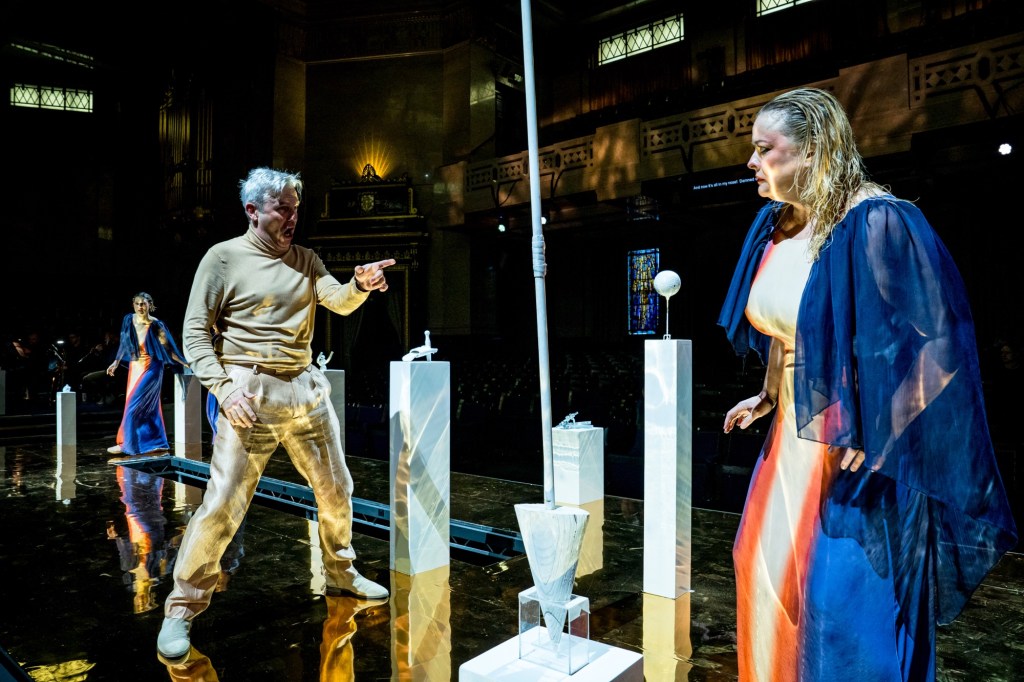
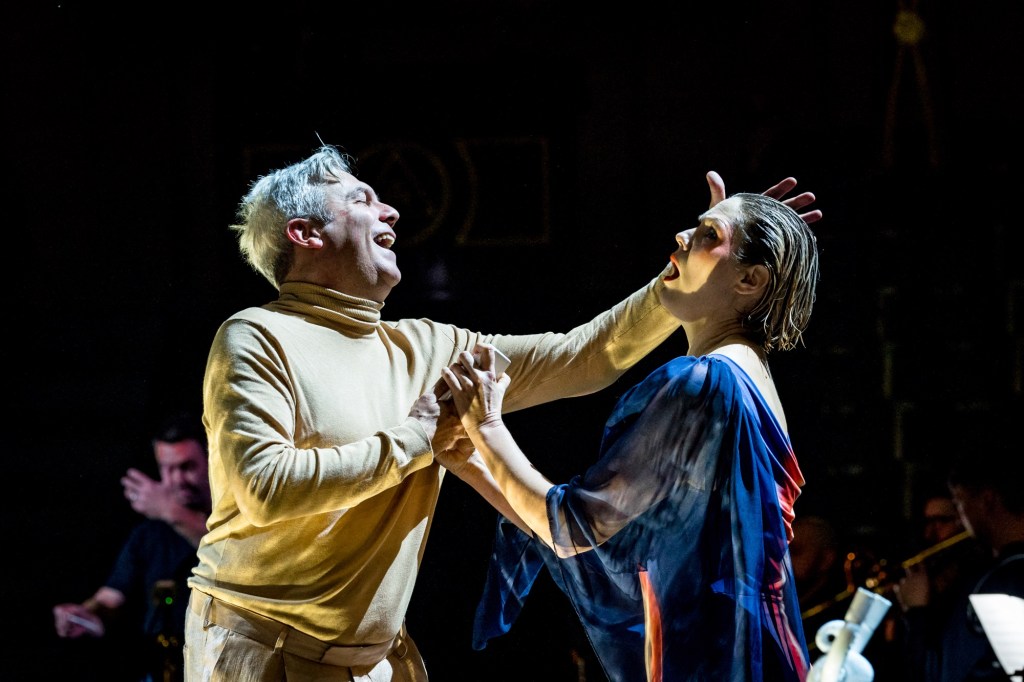
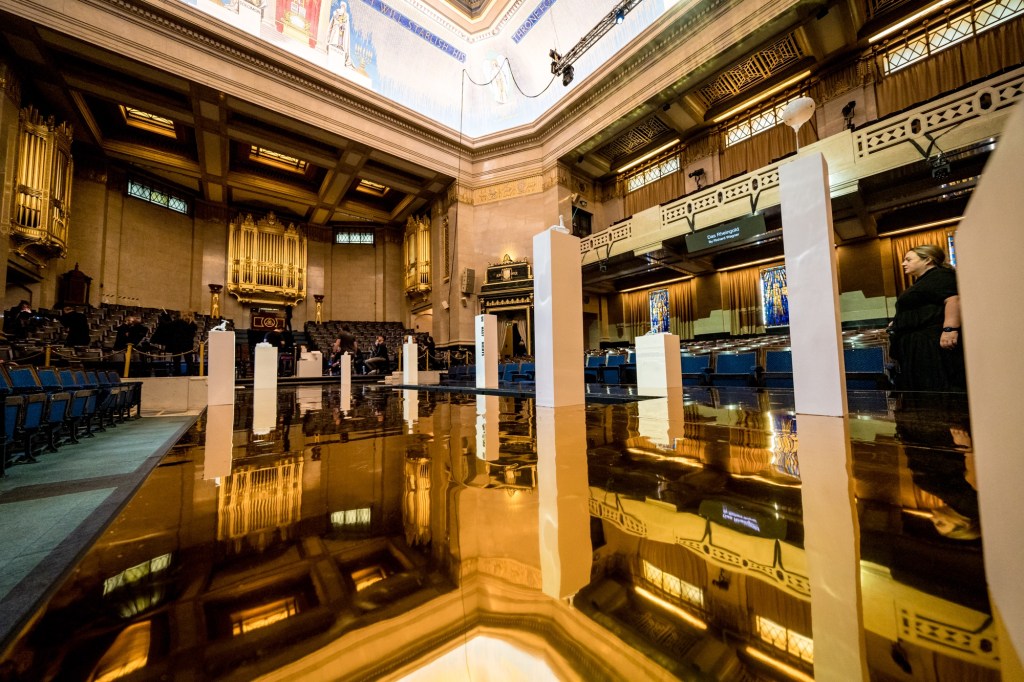
The Rheinmadens & Alberich, Production photos by Steve Gregson
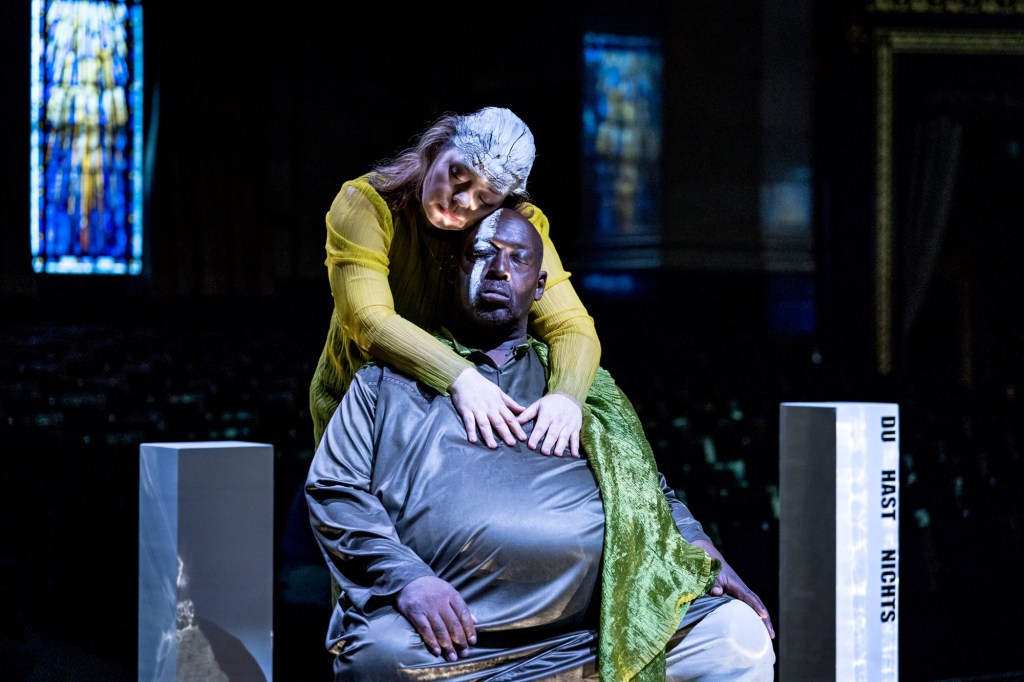
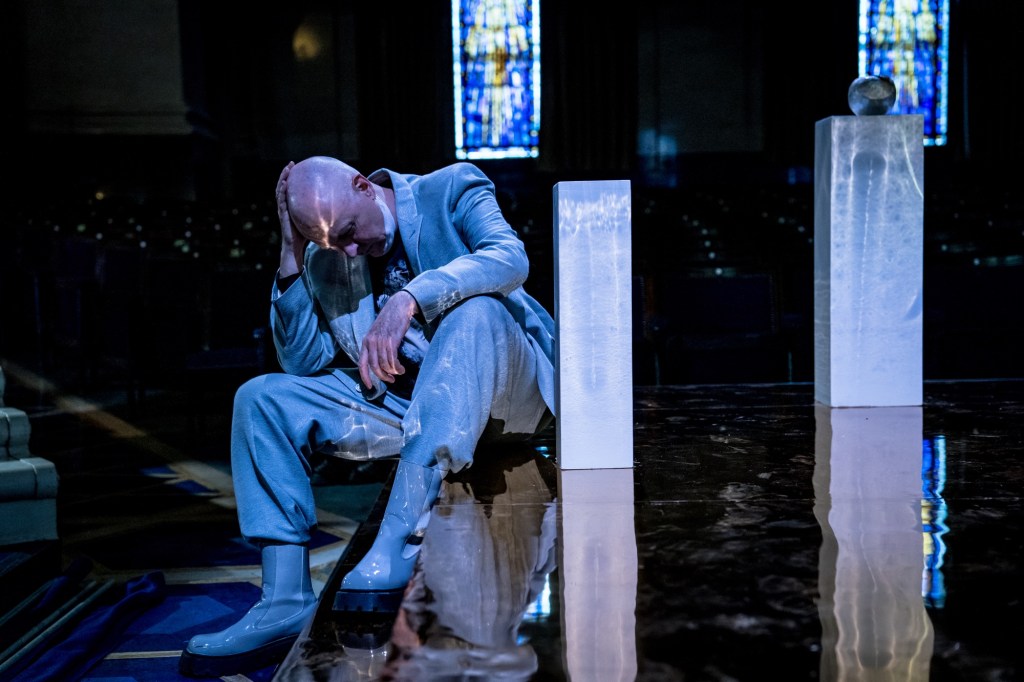
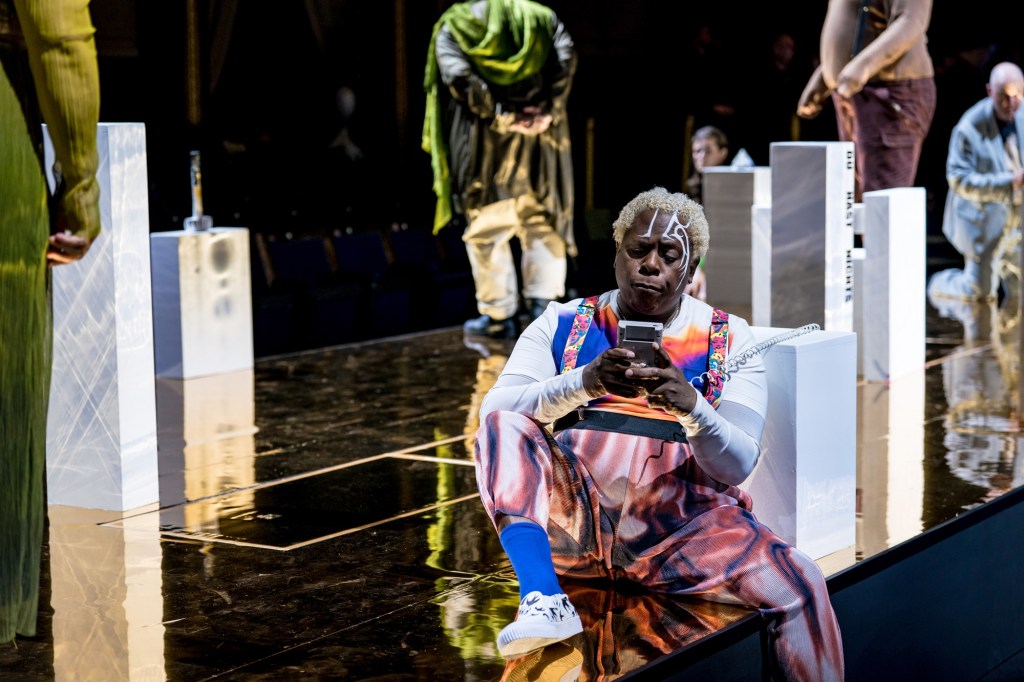


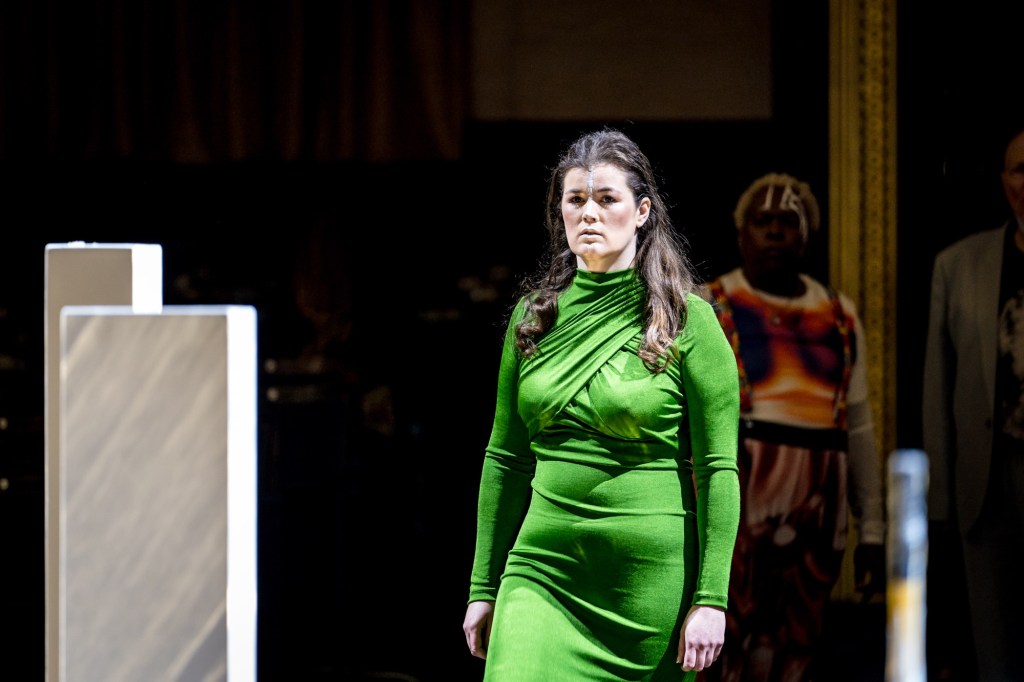

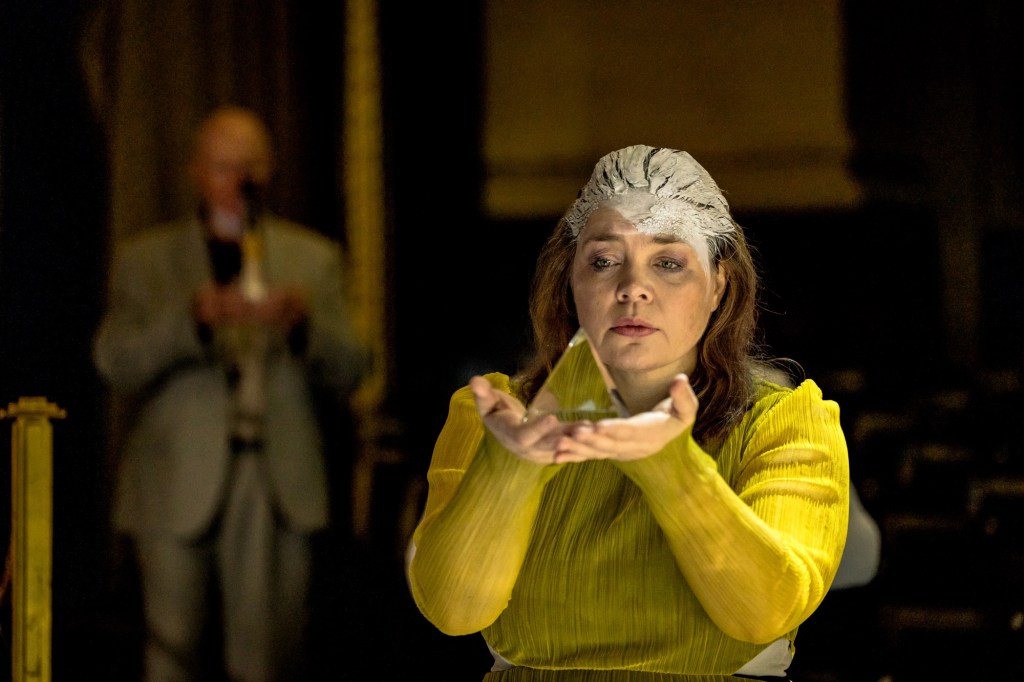
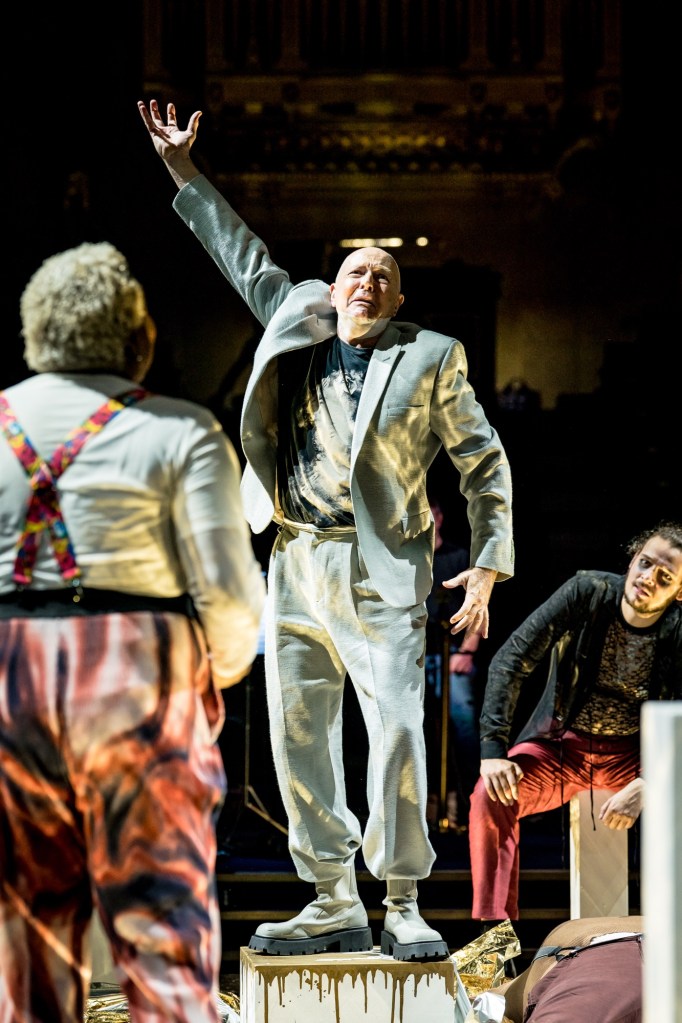
The Gods & Giants, Production photos by Steve Gregson
Set and Costume Design for Opera | Regents Opera, Freemasons Hall
Directed by Caroline Staunton
Written by Richard Wagner
Lighting Design by Mitch Broomhead
Arrangement & Musical Direction by Benjamin Woodward
Production Management by Adam Smith
Produced by Sarah Heenan & Adam Smith for Regents Opera
Costume Assistance by Cieranne Kennedy-Bell
HMUAs Ian Massa Harris, Tristan Rudd, Michele Di Giovanni
Cast: Keel Watson, Calvin Lee, Andrew Mayor, Henry Grant Kerswell, Ingeborg Børch, Oliver Gibbs, Justine Viani, Mae Heydorn, Jillian Finnamore, Charlotte Richardson, James Schouten, Holden Madagame
The ‘prequel’ Das Rheingold of the Ring Cycle marked this production’s chance to create a full length production in both a very unusual setting, being set in the round and with a fringe scale, a reduced orchestra.
One of the key aims for this production was to allow the audience a chance to be introduced to Wagner’s work for the first time, to be accessible but also have great depths and ideas in it’s concept to provide a fresh and exciting production for the Wagnerites as well.
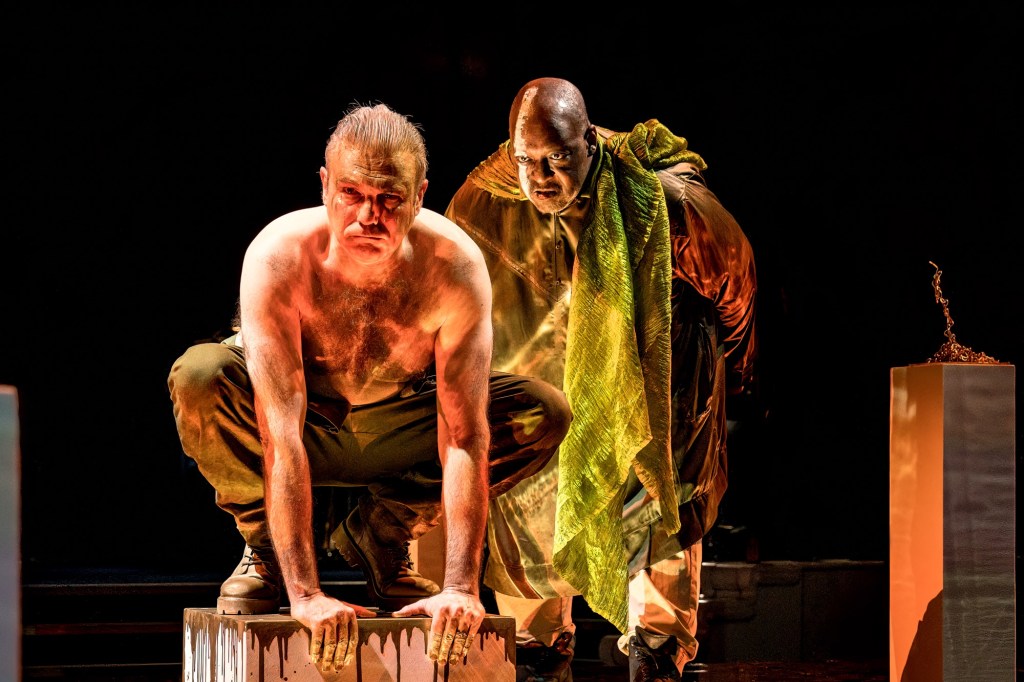
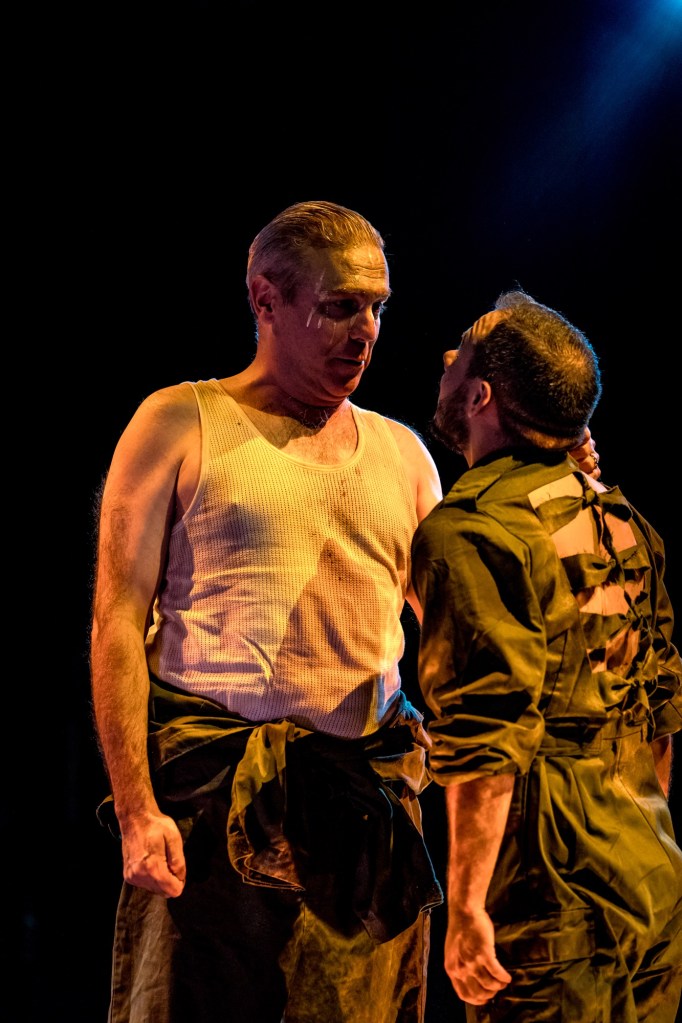
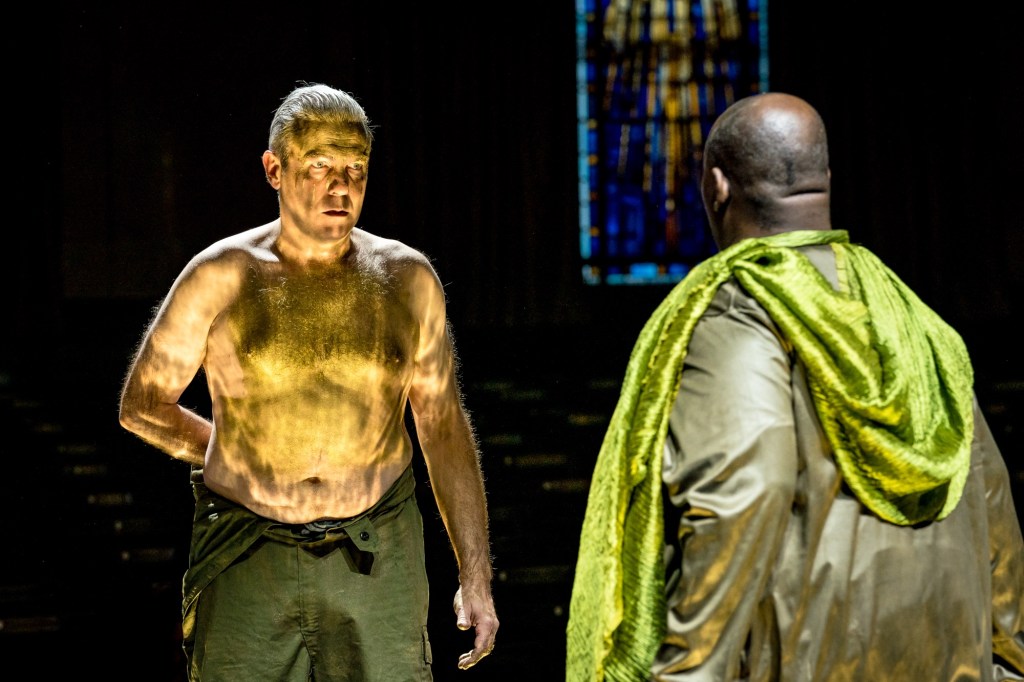
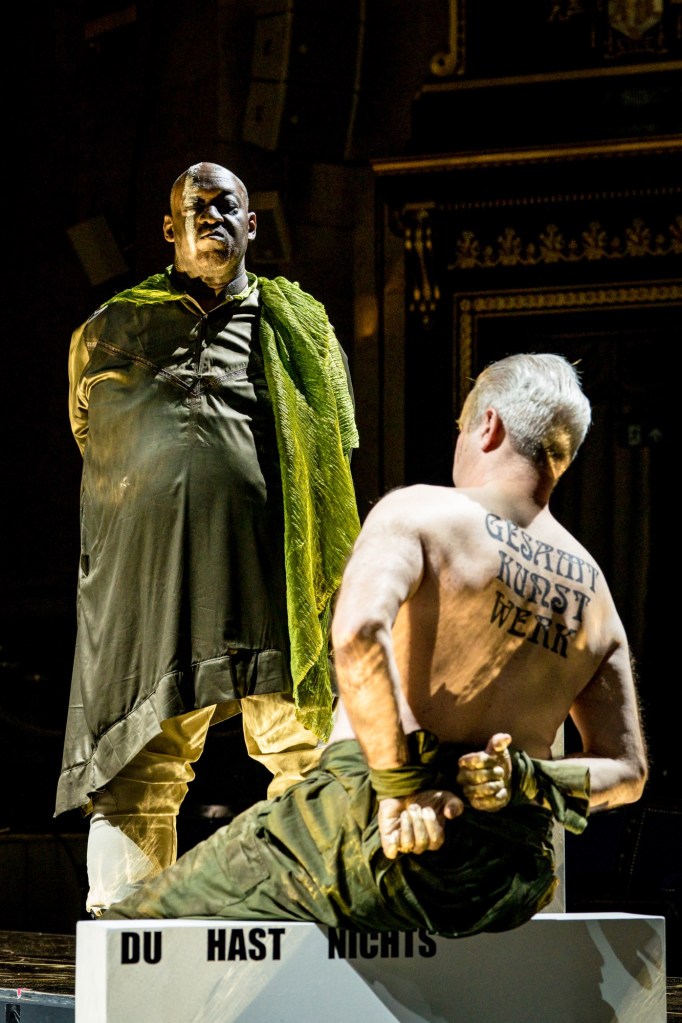
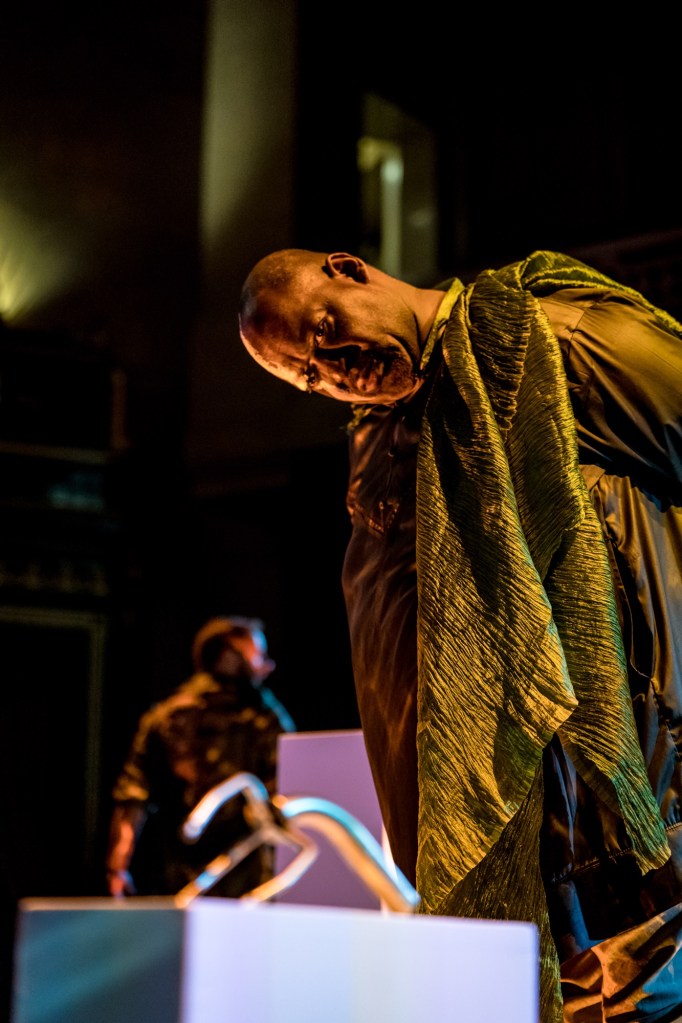

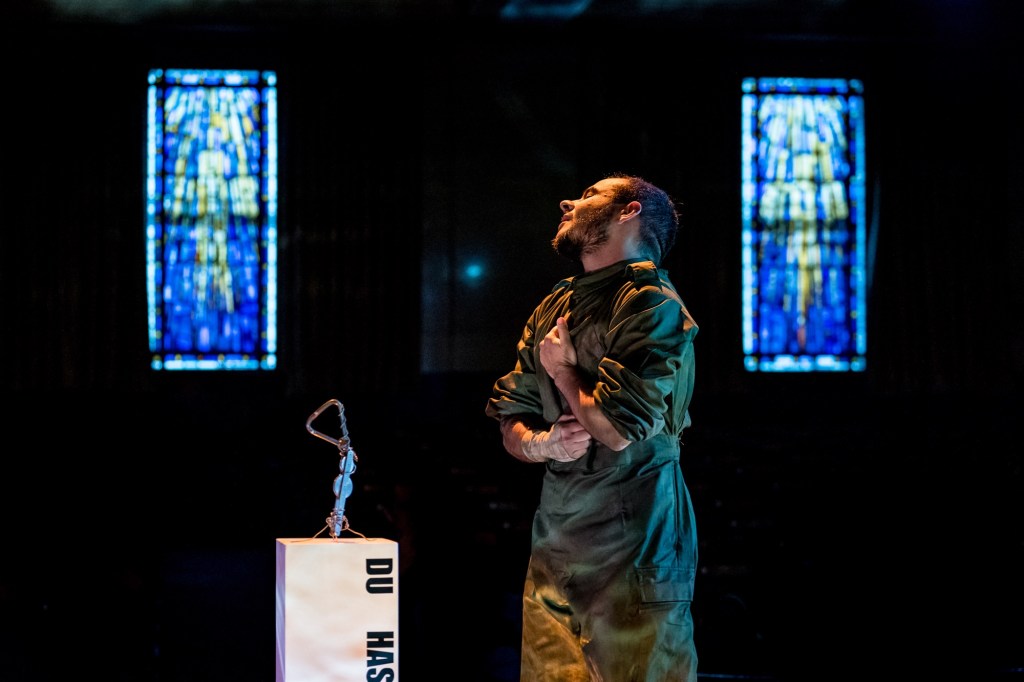
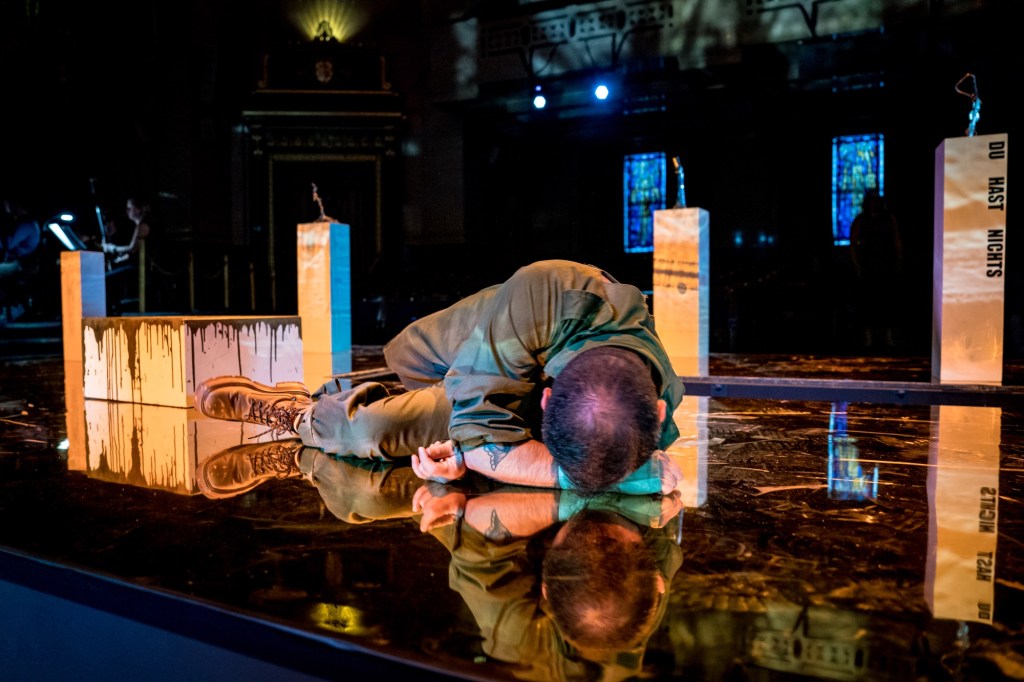
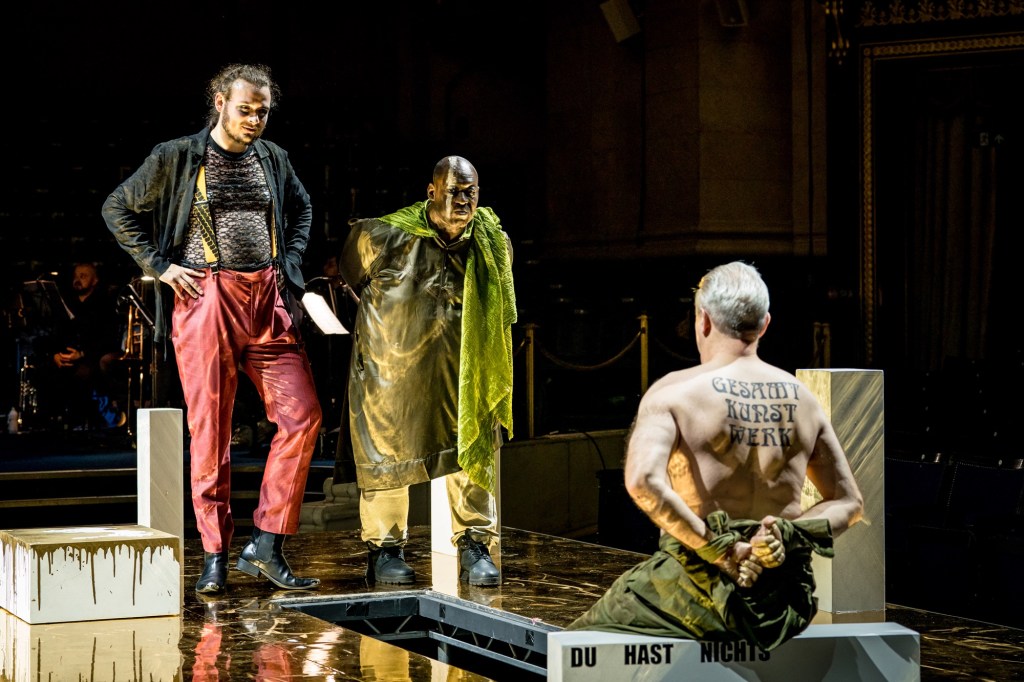
The Nibelheim Caves, Production photos by Steve Gregson
The design was heavily inspired by its environment, leaning into the grandeur of it to highlight the world of the Gods, the floor reflecting and responding to the Freemasons Hall. There was a museum-like structure to the design, something that would be continued to the next parts of the Cycle. Plinths presented art, the Rheinmadens sexual power, the gods represented their personal strengths and in Nibelheim, primitive art created from their metalworking skills.
We leaned in to the restrictions laid in place for us, continuing the theme of art and museum presentation. Costume counteracted this with high colour, print and humour, touching on inspirations of art works themselves. Modern costume allowed these mythical creatures to show their similarity in their failings to us, their humanity against their arrogance.
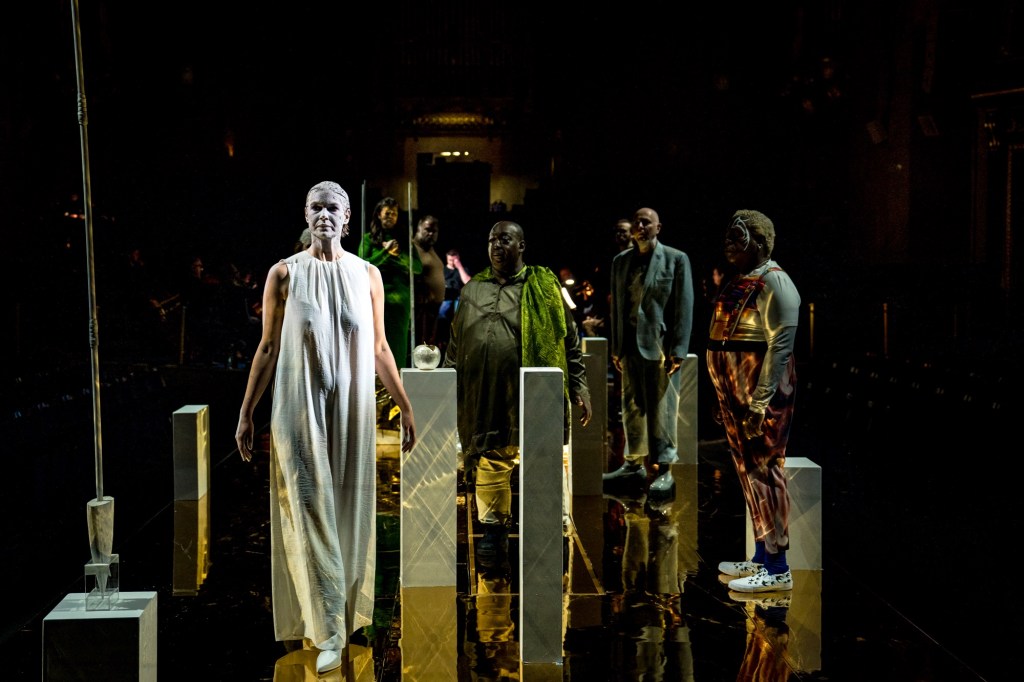
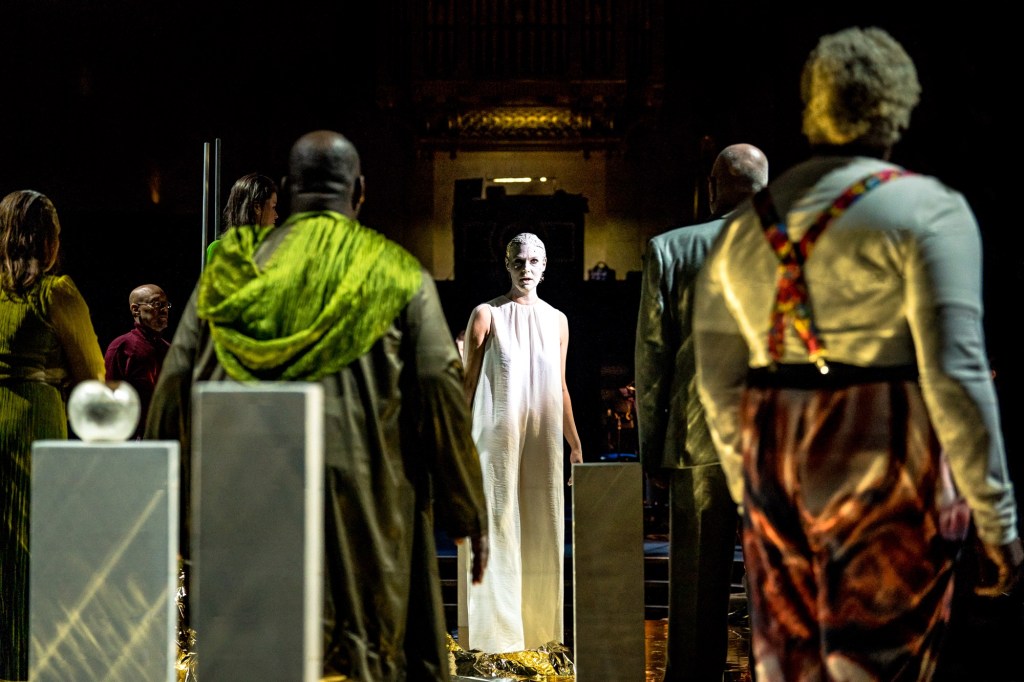
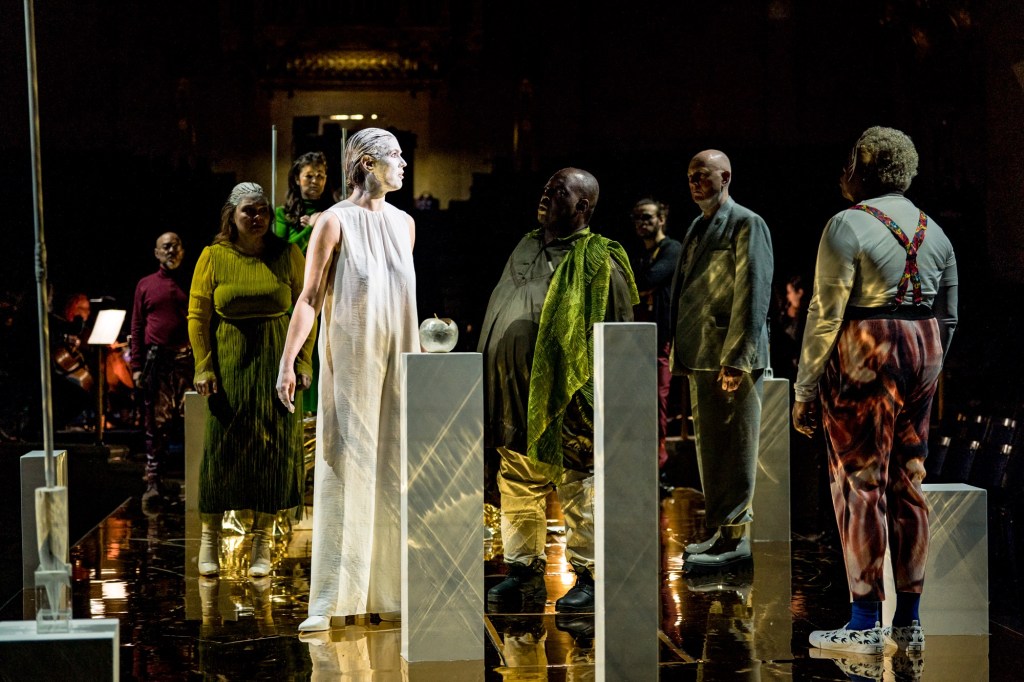
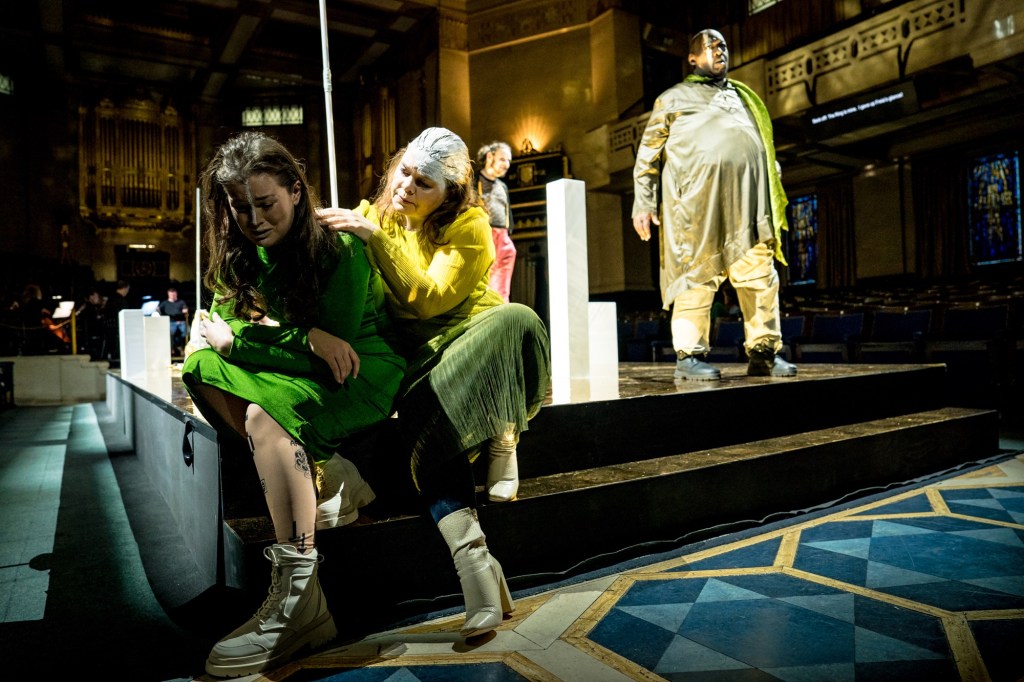
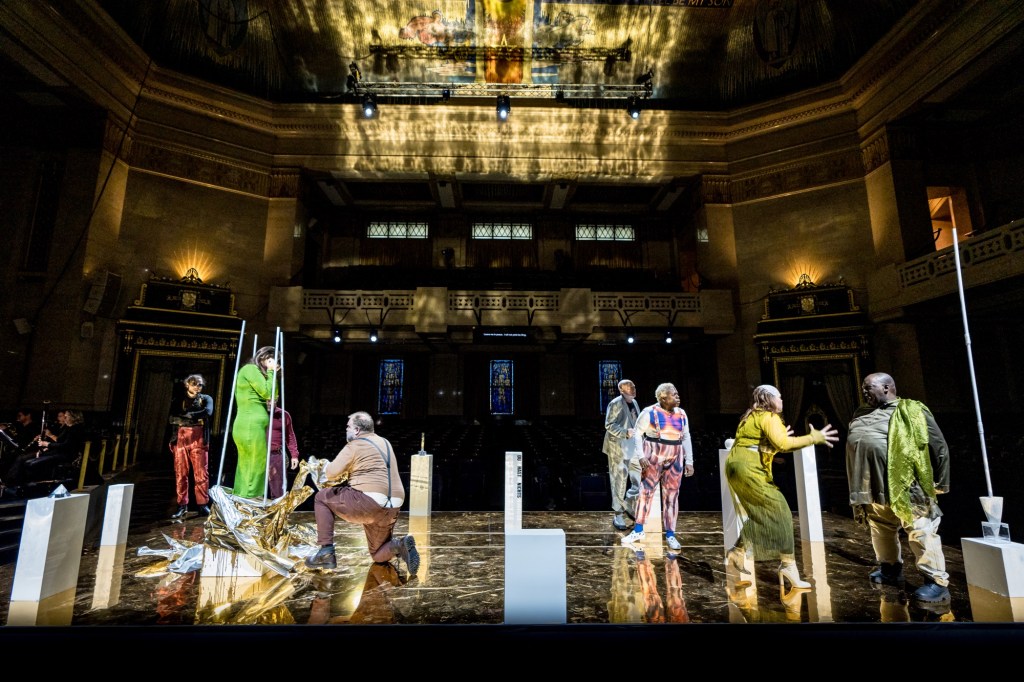
The Arrival of Erda in Walhalla, Production photos by Steve Gregson
“The Freemasons’ Hall really makes a most suitable Valhalla, golden mosaics adorn the ceiling of the Grand Temple. The audience is seated around a central stage and very close to the action. The stage, lined with gold reflects light up to the ceiling, sometimes evoking water, fire or gold. This perhaps takes away from the idea of white cube exhibition space but is a completely remarkable effect.”
Grace Richardson, London Unattached
“Designer Isabella van Braeckel litters the stage with a series of plinths that contain small white sculptures. […] this introduces contemporary ideas on wealth, power and reverence. One plinth remains empty throughout and, in carrying the slogan ‘du hast nichts’, could pertain to the ring itself where the power people believe it possesses is more important than the intrinsic value of the object. Alberich’s stealing of the gold is signified by him taking several sculptures, with the Rhinemaidens’ horrified reaction being akin to them watching him attempt to smash a priceless work of art. Only Wotan’s spear remains on a plinth for the entire opera, revealing how it is the bargains he has made in his pursuit of power that underpin everything we see, and it is notable that he only touches it at the very end.”
“All of the gods have white patches on their faces or hair, but with Erda appearing totally in white the implication is that these are the final traces of a purity that has otherwise left them. Certainly for Wotan white gives way to gold, symbolising the corruption that his lust for power has brought, as Alberich smears his face with it. Prior to this Alberich covers himself far more thoroughly with gold, revealing how he and Wotan are cut from the same cloth, but also how all consuming power is for Alberich since he has renounced love. He also sports a tattoo proclaiming ‘Gesamtkunstwerk’, which interestingly links Wagner’s philosophy to Alberich’s lust for power. Once he has piled up the gold so high that everyone has to bow before him, then for him the whole world will be his masterpiece or total work of art.”
“The great achievement of this Rheingold is, through strong staging and characterisations, to offer a production that feels as engaging and all embracing as many that are able to muster infinitely greater resources for the venture.”
Sam Smith, Music OMH
“Clears out the clutter and extracts the narrative gold at the opera’s heart. In dispensing with tradition, the production aims to be of our time, yet timeless […] yields moments of magic”
Inge Kjemtrup, The Stage
 Isabella Van Braeckel : Designer for Performance